
digiKam 8.6.0 — the first minute without a single click
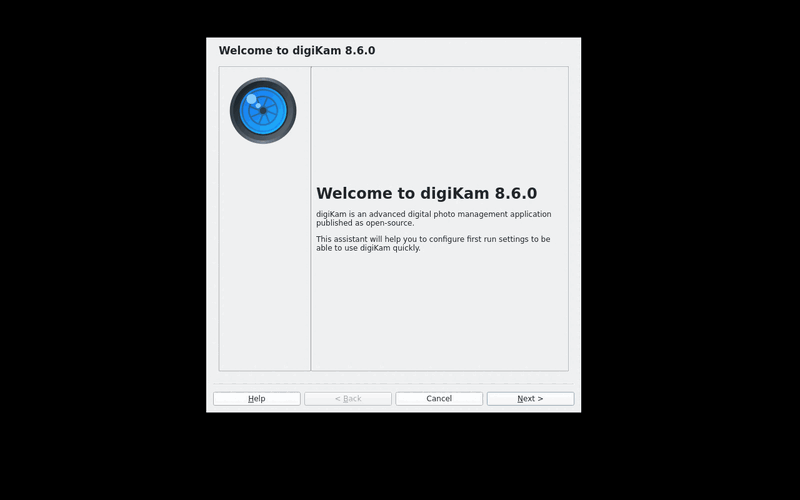
How we tested: a clean Debian 13 in a disposable container; source — package digikam 4:8.6.0-1 from the Debian repository. Run as a regular user on a virtual screen, 60 seconds, nothing clicked. 19.10.2026. Every network request and every file written was recorded; the code was not decompiled. The container was deleted afterwards.
Program website: http://www.digikam.org
Package SHA-256: 8b590354bf846d11d1e270094e9dda20df94a6e0ec90ed1cd4e3165b3af435bb
Summary
| What we checked | Result |
|---|---|
| Built-in telemetry, crash reporting, analytics, ad SDKs | none |
| Network requests in the first minute | not a single network request |
| Known trackers among the servers | none |
| Files written in the first minute | 103 |
| The program ran the whole time | yes — process alive at the end |
What is built in
1920 files (114 MB) were checked.
No code of known telemetry, crash reporting, analytics or ad SDKs was found.
Addresses of known trackers in the program’s files — addresses in code, not requests:
| Tracker | Addresses | Mentions |
|---|---|---|
www.facebook.com, graph.facebook.com | 101 | |
mapsplatform.google.com, maps.google.com, www.google.com, ns.google.com | 66 | |
| Wikimedia | commons.wikimedia.org, meta.wikimedia.org | 65 |
www.linkedin.com | 37 | |
| Twitter/X | twitter.com, www.twitter.com, api.twitter.com, upload.twitter.com | 13 |
www.pinterest.com, api.pinterest.com | 9 | |
| Google APIs | www.googleapis.com, photoslibrary.googleapis.com | 9 |
| OpenStreetMap | nominatim.openstreetmap.org, www.openstreetmap.org | 5 |
| Microsoft Bing Ads | www.bing.com | 1 |
Where it connected
Not a single request: no DNS lookup, no connection.
What it wrote to disk
Folders the program wrote files to during the minute:
| Folder | Files |
|---|---|
~/.cache/mesa_shader_cache_db | 102 |
~/.cache/dconf | 1 |
How to read this card
- This is the first minute after launch with no action at all: what the program does on its own. Normal use may involve more requests.
- A “built-in SDK” means the library’s code was found. It does not prove data transfer, and an address in the code is not a request.
- The review was made automatically using a single method. You can check any program yourself here.